客户服务区域



The creativity of design: Do you need to be original to have individual character
In the European Union, protecting a product's appearance is not simply a matter of filing out a registration form or challenging lookalikes. It is, above all, about meeting two essential legal requirements that determine whether a design can truly stand as an Intellectual Property (IP) right.
Novelty and individual character are the pillars upholding the region's design protection, and for a (registered or unregistered) EU design to be valid, it must demonstrate both. Novelty is self-explanatory: The design has to be new. Essentially, this means that no identical design has been publicly disclosed before the relevant filing or priority date. There are rules and case law clarifying details about novelty, of course, but it is ultimately less of a subjective assessment than the other pillar. Indeed, understanding and applying the concept of individual character can be a bit trickier.
As stated by Article 6 of Council Regulation (EC) No. 6/2002: A design shall be considered to have individual character if the overall impression it produces on the informed user differs from the overall impression produced on such a user by any design which has been made available to the public. [Emphasis added]
This provision expresses the standard shared by all IP rights, namely, the requirement to be different from other (earlier) rights. Hence, trademarks tend not to tolerate similarity that would lead to a likelihood of confusion; patents demand an invention to involve an inventive step; and copyrights oblige originality to arise. Finally, designs have the previously mentioned "individual character" threshold. All four legal principles convey the need for the object of the IP right to depart from what has already been created – or, as some would say, the need to be unique in some sense – and yet each right's doctrine is specific to it and commands a particular interpretation.
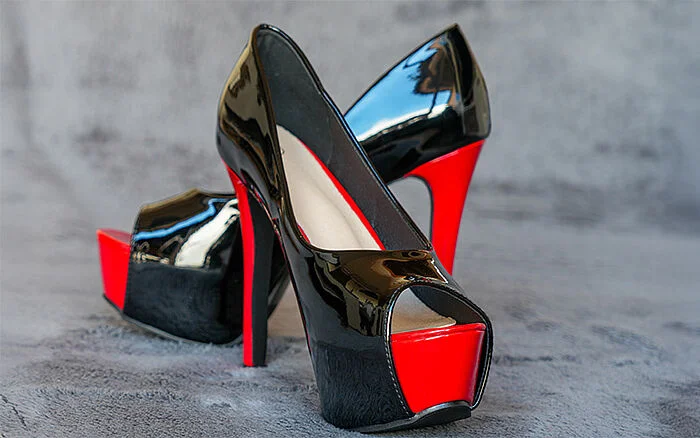
Until recently, the extent to which fashion trends dictate or constrain individual character in EU designs had been an area of legal doubt.
For EU designs (formerly Community designs), that interpretation has allowed some room for uncertainty. There had previously been court decisions illuminating the "informed user" and "overall impression" elements of the definition above, but one piece of the puzzle was still missing. Thankfully, the Second Chamber of the Court of Justice of the European Union (ECJ) has now given us some clarity on the concept of individual character as a whole and how it may differ from copyright's originality.
This clarification came to us courtesy of a request for preliminary ruling from the Commercial Court No. 1 of Alicante, Spain, in the case Deity Shoes, S.L. vs. Mundorama Confort, S.L. and Stay Design, S.L. The proceedings concern an action brought by Deity Shoes for infringement of registered and unregistered Community designs for several models of shoes and a counterclaim for a declaration of invalidity of the same.
In the EU, Deity Shoes owns several designs representing shoes, but these are, for the most part, predetermined by options offered by Chinese trading undertakings. This modularity allows the customer to customize, according to set catalogs, various components of the shoe, e.g., the color, material, laces, the placement of buckles and additional decorative elements. Mundorama Confort and Stay Design filed counterclaims for a declaration of invalidity of those dependent designs, arguing that there is no innovation because Deity Shoes is simply marketing shoes offered by Chinese trading undertakings.
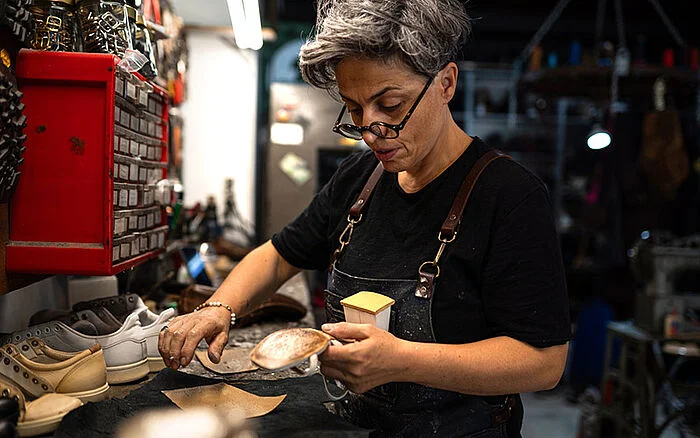
Registered design rights are relatively inexpensive and quick to obtain, making them especially attractive for smaller businesses.
Thence, the Court in Alicante referred four questions to the ECJ, which can be summarized as follows:
- Is it necessary for there to be a genuine design activity in such a way that the design is the result of the intellectual effort of its creator?
- May all or some of the feature[s] of appearance of a product resulting from the customization of designs be regarded as having individual character?
- May a person be regarded as the designer in relation to a design where, on the basis of a design offered by trading undertakings in accordance with a catalog, he or she has merely customized that prior design by modifying components also offered by the trader?
- Do fashion trends restrict the designer's freedom in such a way that minor differences between the design and another model are sufficient to give a different overall impression or, conversely, do they detract from the individual character of the design with the effect that those elements or components [from the trader's catalogue] are of less importance in the overall impression they produce on the informed user in so far as they result from known fashion trends when compared with another model?
In response to these questions, the ECJ's Second Chamber ruled that:
- [Council Regulation (EC) No 6/2002 and, in particular, Articles 4 to 6 thereof] must be interpreted as meaning that, in order to enjoy the protection conferred on a Community design, the owner or designer of that design does not have to demonstrate, in addition to the existence of the conditions of novelty and individual character, that that design is the result of a minimum degree of creation.
- Article 6 of Regulation No 6/2002 must be interpreted as meaning that, firstly, the fact that designs have predetermined visual characteristics provided by a model offered in a supplier's catalogue to the designer of those designs, and that the modifications made to those designs by their designer are only ad hoc and relate to components offered by that supplier, is not in itself capable of preventing the recognition of their individual character within the meaning of that Article 6. Secondly, fashion trends are not likely to limit the degree of freedom of the designer in such a way that minor differences between one or more prior designs and the design at issue may suffice for that design to produce a different overall impression on the informed user than that produced by those prior designs and thus have an individual character. The features of a design which result from fashion trends are not likely to be of lesser importance in the overall impression they produce on such a user.

The ECJ's ruling is a win for designers, spelling out that selecting from a predefined set of components does not, on its own, bar a design from IP protection.
The ECJ has thus clarified that for the assessment of the individual character of a design, we should limit ourselves to the end result, no matter how it came to be and regardless of any degree of creativity on the part of the designer. Essentially, the ECJ's viewpoint is, without affront, that the designer could have been picking elements in the same way a monkey typing at a typewriter would eventually write a Shakespeare tragedy. The only relevance for the evaluation is found in the final product. Meanwhile, the identity of the designer is important solely to know who is vested with the rights in the design once it is "created."
This is the opposite of the originality concept as it appears in copyright law. A work is considered original if it reflects the author's own intellectual creation, which means that it carries the imprint of the author's personality and results from their free and individual choices. The monkey at the typewriter might write a wonderful, unique novel, but it will never enjoy copyright protection (see the famous monkey selfie case). What matters is neither artistic merit nor effort, but the presence of personal and creative expression. This expression on the originator's part is not required for design protection to arise.
In some cases, the object of a design right might also qualify for protection as a work under copyright; however, there is no automatism in either direction. The creative process and its end result need to be examined separately and through the application of differing standards to establish that the object of a design has both individual character and is original.
A version of this article was first published in CITMA Review magazine, INTA special 2026.
Filed in
Explore the May 2025 ruling in Loro Piana vs. Smart Luxury, revealing design rights limits, brand evidence needs and fashion IP strategy insights.
Fashion, competition and IP: lessons from the Loro Piana vs. Smart Luxury decision
Explore the May 2025 ruling in Loro Piana vs. Smart Luxury, revealing design rights limits, brand evidence needs and fashion IP strategy insights.

Taking a bite out of IP law: exploring two EUIPO snack cases
Learn about recent legal cases concerning trademarks and registered Community designs.

Design law steals the show
Two major developments in 2024 are set to give a further boost to design rights and likely make them even more attractive for designers and other creative businesses.

Building brand identity with trademarks and industrial designs
Learn the difference between trademarks and industrial design — and why each has a crucial role in building brand identity.

Get the updates in your inbox
Subscribe to get the latest news and updates.
No spam. We promise.